Marathon Running Coaching
Customized marathon coaching for runners who want to build mileage, improve performance, and stop letting injuries derail their training.

Train for Your Marathon Without Letting Injury Derail Your Race
You signed up for the marathon. You know you’re willing to put in the work.
But if marathon training has become a familiar cycle of building mileage, developing pain, missing workouts, taking time off, and trying to start again, another generic training plan probably isn’t the answer.
At RunRocket, marathon running coaching is built around you—your body, running experience, injury history, goals, schedule, strength, recovery, and real life.
Dr. Irina Stiasny is both a running coach and Doctor of Physical Therapy. That combination allows her to look beyond pace and mileage when building your marathon training program. She considers how well your body is handling the training, where strength or mobility limitations may be affecting you, how previous injuries should influence your program, and when training needs to be adjusted before a small problem becomes a bigger one.
Whether you’re preparing for your first 26.2 or chasing a new marathon PR, the goal is to help you reach the starting line healthy, prepared, and confident.
Ready to train differently for your next marathon?
Marathon Training Should Fit Your Life, Not Take It Over
Before building your program, Irina wants to understand
Your schedule and travel plans
Previous injuries or surgeries
Your running and strength experience
Your marathon goals
Your fears about training or race day
Other races on your calendar
Because all of those things affect how you should train.
Then life happens. You travel unexpectedly. Work gets busy. Your child gets sick. You miss a run. Something starts hurting.
Life shows up in every training cycle, and a good plan bends with it.
Irina doesn’t cram missed workouts into the rest of the week, and she doesn’t guilt you when life gets in the way. She adjusts the program based on where you are now and what makes sense next.
That flexibility is one of the biggest differences between working with a marathon running coach and following a plan from an app or the internet.
A static plan can tell you what was supposed to happen Tuesday.
A coach can help you decide what should happen next.
A Marathon Training Plan Built for Your Starting Point
Training for your first marathon should not look exactly like training for your fifth marathon.
RunRocket marathon coaching is individualized based on your experience, current fitness, strength, injury history, goals, and ability to recover.
Training for Your First Marathon
For a first marathon, Irina starts with the foundation.
You build your running base slowly, and strength training comes first. Speed work, tempo runs, and big mileage jumps come later, once your body can handle them.
Roxi is a good example. She came to Irina with plantar fasciitis and hip issues. Instead of a standard marathon plan, she started with a base-building phase to get her body ready for the training ahead.
Training for a Marathon PR
An experienced runner needs a different plan.
Your training may include speed work, tempo runs, hills, plyometrics, strength training, and workouts built around your race goal.
More mileage and harder workouts are not the answer by default. Irina often sees runners training too hard, too often. Easy miles stop being easy, recovery suffers, and aches start showing up.
Hard workouts should have a purpose. So should easy ones.
The goal is to build the fitness and durability to perform on race day.
Stop Letting Injury Derail Every Marathon Training Cycle
If you seem to get hurt every time you train for a marathon, you are exactly the runner Irina wants to work with.
Marathon training puts a lot of repeated load on your body. Adding miles without thinking about strength, past injuries, recovery, mobility, and sleep can eventually catch up with you.
Signs your body isn't handling the load
As a physical therapist and running coach, Irina watches for:
Aches and pains that don't go away
Unusual fatigue
Trouble recovering
Changes in the way you run
What Irina may change
That does not mean you have to stop running. She may:
Change your pace and effort
Remove a hard workout
Reduce your training load
Add recovery
Adjust your strength work
Recommend cross-training
She also builds your strength program around your previous injuries and surgeries, instead of treating that history as separate from your marathon training.
When something hurts, most runners go to one of two extremes
Stop running completely, then come back at full force once the pain fades
Ignore the pain and keep training until it gets much worse
RunRocket's approach is different
Understand what your body is telling you, make the right adjustment, and keep moving forward when it is safe.
How RunRocket Marathon Coaching Works
You aren't handed a complete marathon training calendar on day one and expected to follow it perfectly for the next several months.
Irina programs training two weeks at a time so the program can continue responding to how your training is actually going.
Your marathon coaching includes
Individualized training, including weekly mileage and long-run progression, based on your experience, goals, schedule, and injury history
Training programmed two weeks at a time
Weekly workout reviews and feedback
1:1 Zoom coaching calls every two weeks
Access to Irina through Final Surge or email
Strength training built into your running program
Adjustments when work, travel, illness, family, pain, or recovery affect your training
Pacing, fueling, hydration, and race-day strategy, plus taper planning and post-marathon recovery
The regular communication matters.
Instead of waiting until something has gone seriously wrong, you have an opportunity to address the little things while they are still little.
Your workouts can also change as your fitness changes. What made sense four weeks ago doesn't automatically remain the right workout simply because it was written on a calendar.
How Far Ahead Should You Start Marathon Coaching?
Ideally, Irina recommends beginning marathon coaching about six months before race day.
At minimum, she prefers approximately four months.
Starting earlier creates time to build a strong running base, address strength or mobility limitations, progressively increase mileage, establish good recovery habits, and work through existing problems before marathon-specific training becomes more demanding.
It is especially valuable if you are already dealing with an injury or have a history of becoming injured during marathon training.
If your race is closer than four months away, that doesn't automatically mean Irina can't work with you.
She will look at your current fitness, running experience, available training time, and race goal to determine what can realistically be accomplished. If the original goal doesn't make sense within the time available, she will be clear about expectations rather than pushing your body beyond its current training level.
From “Walking on Glass” to a Pain-Free Berlin Marathon
When Ingrid began working with Irina, she had been struggling with plantar fasciitis for more than a year.
She had already completed the London Marathon while dealing with significant foot pain. She described the experience as feeling like she was walking on glass.
But she had another goal ahead of her: the Berlin Marathon.
Ingrid hired Irina because she wanted to address the plantar fasciitis while still preparing to finish Berlin.
Instead of simply telling Ingrid to stop running or forcing her through a standard marathon plan, Irina modified her mileage, focused on strengthening her legs, and continued adjusting her training based on how her body responded.
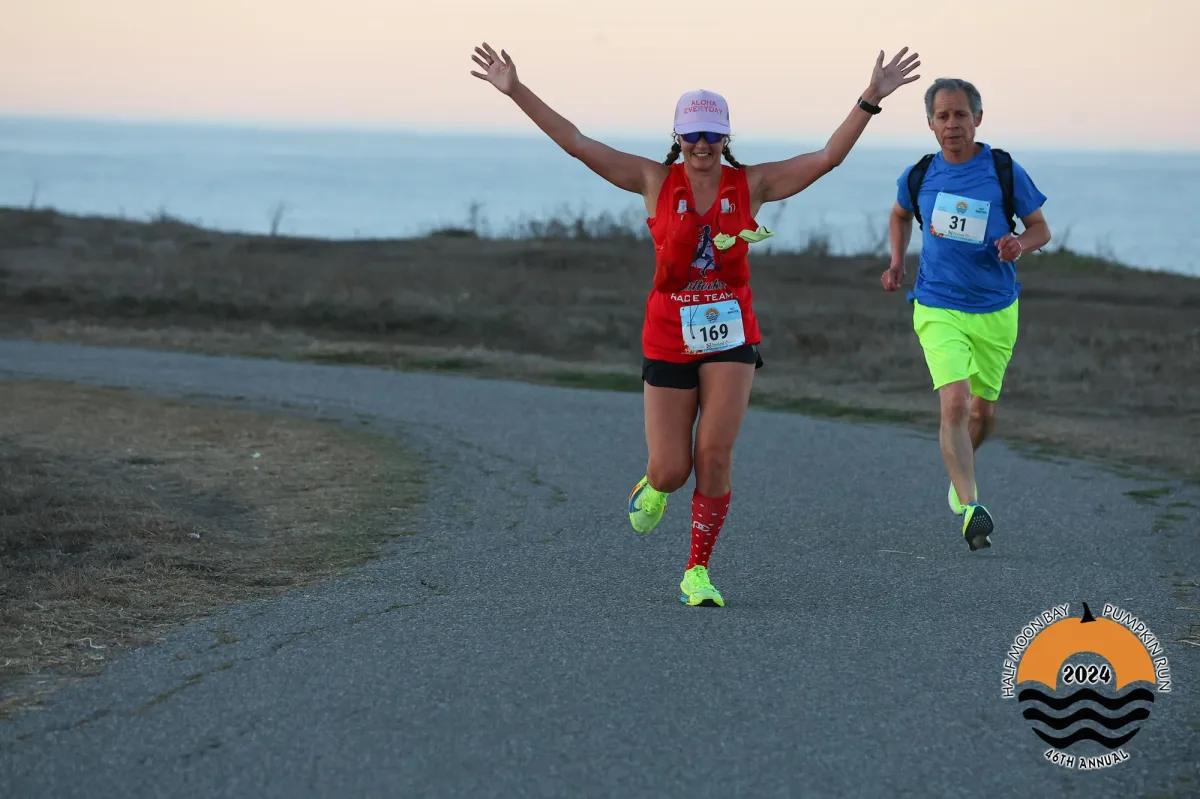
Ingrid went on to run the Berlin Marathon pain-free.
And this wasn't simply a matter of getting through one race.
A year later, Ingrid was still running pain-free without plantar fasciitis and had completed multiple additional races.
For Irina, that's what successful marathon coaching should accomplish. The finish line matters. But so does what your body allows you to do after you cross it.
Is Marathon Running Coaching Right for You?
RunRocket Marathon Running Coaching may be a particularly good fit if you:
Get injured every time you build mileage, or deal with recurring issues like plantar fasciitis, hip pain, or knee pain
Have followed generic marathon plans but struggled to stay healthy or consistent
Are training for your first marathon and aren’t sure how fast to build mileage
Have previous injuries or surgeries your training needs to work around
Want to improve your marathon performance without simply running more miles
Have a demanding job, kids, travel, or other responsibilities that make rigid schedules hard
Want guidance when something starts hurting, plus regular feedback and accountability
Want strength training built in, and a coach who understands both running and rehab
You do not need to be an elite runner to benefit from marathon coaching. You need a goal, a willingness to train, and a program that meets you where you are.
Marathon Running Coaching FAQs
How long should I train for a marathon?
There isn't one timeline that works for every runner. Irina ideally likes to begin working with marathon athletes about six months before race day, with approximately four months being the minimum she prefers for marathon-specific preparation. Your experience, current mileage, injury history, strength, and goals all affect how much preparation you need.
Can you coach me for my first marathon?
Yes. First-time marathon runners can benefit significantly from having guidance before mileage becomes high. Irina focuses on establishing a running base and building strength before introducing more demanding marathon workouts. You don't need to already be an experienced distance runner to work with a marathon coach.
Can I train for a marathon if I have a history of running injuries?
Previous injuries don't automatically mean you shouldn't train for a marathon. In fact, runners who repeatedly get injured during marathon training are among the athletes Irina most wants to help. Your injury and surgical history are considered when developing your training and strength program, and your response to increasing mileage is monitored throughout the process.
What happens if I miss a marathon training workout?
You don't automatically make it up. Irina believes life happens, and missing one workout doesn't mean the rest of your week needs to be rearranged or overloaded. She evaluates what you missed, where you are in your training, and what is coming next before deciding whether anything needs to change.
Do I have to stop running if something hurts?
Not necessarily. Pain needs to be evaluated in context. Irina may modify your effort, remove a hard workout, adjust your mileage, add recovery, modify strength work, or recommend cross-training depending on your symptoms. If pain is significantly affecting your running mechanics or causing you to limp, that may be a sign that running needs to be temporarily modified rather than pushed through.
Is strength training part of marathon coaching?
Yes. Strength training is an important part of Irina's marathon coaching philosophy. She uses progressive strength work to help runners better tolerate the increasing load of marathon training, with programming influenced by the athlete's individual strength, running history, and previous injuries.
Will you help me with marathon pacing and race-day strategy?
Yes. Before the marathon, Irina meets with athletes to discuss race strategy, including pacing, hydration, nutrition, race preparation, and post-race recovery.
Train for Your Marathon Without Doing It Alone
Marathon training doesn’t have to end in the same injury cycle.
With RunRocket, you get a running coach who adjusts your plan as your life and body change, with the perspective of a physical therapist.
The goal is to get you to the starting line healthy, prepared, and confident.
Run Rocket PT
Empower your running potential with RunRocket PT.
Copyright © 2026 Run Rocket Physical Therapy and Wellness.
All rights reserved.
Connect On

